Frankfurt
UTC+2
25:04
Xetra · 09:00-17:30
17:04 local
closes 17:30
power hour Frankfurt, Xetra, power hour. closes 17:30Light & dark mode
Prefer a brighter view? Tap the sun / moon icon in the top bar to switch themes anytime. Your choice is saved per screen on this device.
Yes. 5 of 12 exchanges are trading, including Frankfurt, London, Zurich. Frankfurt closes next, in 25:04.
New York closes in 4:55:04 ·
UTC+2
Xetra · 09:00-17:30
17:04 local
closes 17:30
power hour Frankfurt, Xetra, power hour. closes 17:30UTC+1
LSE · 08:00-16:30
16:04 local
closes 16:30
power hour London, LSE, power hour. closes 16:30UTC+2
SIX · 09:00-17:20
17:04 local
closes 17:30
power hour Zurich, SIX, power hour. closes 17:30UTC-3
B3 · 10:00-17:00
12:04 local
closes 17:00
open Sao Paulo, B3, open. closes 17:00UTC-4
NYSE · 09:30-16:00
11:04 local
closes 16:00
open New York, NYSE, open. closes 16:00 Largest market by value.UTC+10
ASX · 10:00-16:12
01:04 local
opens 10:00
closed Sydney, ASX, closed. opens 10:00UTC+9
TSE · 09:00-15:30
00:04 local
opens 09:00
closed Tokyo, TSE, closed. opens 09:00UTC+8
SSE · 09:30-15:00
23:04 local
opens 09:30
closed Shanghai, SSE, closed. opens 09:30UTC+8
HKEX · 09:30-16:10
23:04 local
opens 09:30
closed Hong Kong, HKEX, closed. opens 09:30UTC+5:30
NSE · 09:15-15:30
20:34 local
opens 09:15
closed Mumbai, NSE, closed. opens 09:15UTC+3
TASE · 09:45-14:15
18:04 local
opens 09:50
closed Tel Aviv, TASE, closed. opens 09:50UTC+2
JSE · 09:00-17:00
17:04 local
opens 09:00
closed Johannesburg, JSE, closed. opens 09:00Each bar is one exchange's session, drawn across the UTC day. The bars that sit on top of each other are the overlaps, and the one that matters most runs from the New York open to the London close, roughly 13:30 to 16:30 UTC in the northern summer. That is when the two largest centres trade at the same time, which is why currency volume peaks there and why spreads are usually at their tightest.
Session times come from each exchange's own trading window, so holidays and half days are already reflected. The holiday names are still being verified for markets outside the United States, so a closed exchange may not say why.
| Exchange | Venue | Opens | Closes | Days | UTC now | Notes |
|---|---|---|---|---|---|---|
| Sydney | ASX | 10:00 | 16:12 | Monday to Friday | UTC+10 | |
| Tokyo | TSE | 09:00 | 15:30 | Monday to Friday | UTC+9 | Lunch 11:30 to 12:30 |
| Hong Kong | HKEX | 09:30 | 16:10 | Monday to Friday | UTC+8 | Lunch 12:00 to 13:00 |
| Shanghai | SSE | 09:30 | 15:00 | Monday to Friday | UTC+8 | Lunch 11:30 to 13:00 |
| Mumbai | NSE | 09:15 | 15:30 | Monday to Friday | UTC+5:30 | |
| Tel Aviv | TASE | 09:50 | 17:30 | Monday to Friday | UTC+3 | Friday 09:45 to 14:15 |
| Johannesburg | JSE | 09:00 | 17:00 | Monday to Friday | UTC+2 | |
| Frankfurt | Xetra | 09:00 | 17:30 | Monday to Friday | UTC+2 | |
| London | LSE | 08:00 | 16:30 | Monday to Friday | UTC+1 | |
| Sao Paulo | B3 | 10:00 | 17:00 | Monday to Friday | UTC-3 | |
| New York | NYSE | 09:30 | 16:00 | Monday to Friday | UTC-4 | |
| Zurich | SIX | 09:00 | 17:20 | Monday to Friday | UTC+2 |
All times are local to each exchange. Holidays and shortened holiday sessions are not listed here: the clocks above read each exchange's real window for the day, so they already reflect them.
The Sydney Stock Exchange (ASX) opens at 10:00 and closes at 16:12 local time, Monday to Friday, which is 00:00 to 06:12 UTC while Sydney is on UTC+10.
The Tokyo Stock Exchange (TSE) opens at 09:00 and closes at 15:30 local time, Monday to Friday, which is 00:00 to 06:30 UTC while Tokyo is on UTC+9. It pauses for lunch from 11:30 to 12:30 local.
The Hong Kong Stock Exchange (HKEX) opens at 09:30 and closes at 16:10 local time, Monday to Friday, which is 01:30 to 08:10 UTC while Hong Kong is on UTC+8. It pauses for lunch from 12:00 to 13:00 local.
The Shanghai Stock Exchange (SSE) opens at 09:30 and closes at 15:00 local time, Monday to Friday, which is 01:30 to 07:00 UTC while Shanghai is on UTC+8. It pauses for lunch from 11:30 to 13:00 local.
The Mumbai Stock Exchange (NSE) opens at 09:15 and closes at 15:30 local time, Monday to Friday, which is 03:45 to 10:00 UTC while Mumbai is on UTC+5:30.
The Tel Aviv Stock Exchange (TASE) opens at 09:50 and closes at 17:30 local time, Monday to Friday, which is 06:50 to 14:30 UTC while Tel Aviv is on UTC+3. On Friday it trades a shorter session, 09:45 to 14:15 local.
The Johannesburg Stock Exchange (JSE) opens at 09:00 and closes at 17:00 local time, Monday to Friday, which is 07:00 to 15:00 UTC while Johannesburg is on UTC+2.
The Frankfurt Stock Exchange (Xetra) opens at 09:00 and closes at 17:30 local time, Monday to Friday, which is 07:00 to 15:30 UTC while Frankfurt is on UTC+2.
The London Stock Exchange (LSE) opens at 08:00 and closes at 16:30 local time, Monday to Friday, which is 07:00 to 15:30 UTC while London is on UTC+1.
The Sao Paulo Stock Exchange (B3) opens at 10:00 and closes at 17:00 local time, Monday to Friday, which is 13:00 to 20:00 UTC while Sao Paulo is on UTC-3.
The New York Stock Exchange (NYSE) opens at 09:30 and closes at 16:00 local time, Monday to Friday, which is 13:30 to 20:00 UTC while New York is on UTC-4.
The Zurich Stock Exchange (SIX) opens at 09:00 and closes at 17:20 local time, Monday to Friday, which is 07:00 to 15:20 UTC while Zurich is on UTC+2.
Which stock markets are open right now?
It depends on the hour, which is why this page counts rather than lists. At 06:00 UTC the Asia-Pacific markets are trading and everything west of them is shut; at 14:30 UTC London and New York are open together and Asia has gone home. The answer at the top of this page is generated live and names the exchanges currently trading, out of the twelve tracked here.
How long until the market opens?
Every clock on this page counts down to whatever happens next for that exchange. An open market counts to its close, a closed one counts to its next open, and a market on a midday break counts to the reopen. Weekends and known holidays are skipped, so a Friday evening counts to Monday's bell rather than to Saturday.
How does the 24 hour global trading cycle work?
Trading follows the sun westward in three waves. Asia-Pacific opens first, Sydney then Tokyo, Hong Kong, Shanghai and Mumbai. Europe, the Middle East and Africa take over as Asia finishes: Tel Aviv, Johannesburg, Zurich, Frankfurt and London. The Americas close the day with Sao Paulo and New York. The handovers are what create the overlaps, and there is one genuine gap: after New York closes, around 20:00 UTC, no tracked exchange is trading until Sydney opens roughly four hours later.
Are stock markets open at the weekend?
No. All twelve exchanges here trade Monday to Friday only, and none opens on Saturday or Sunday. Cryptocurrency trades continuously, including weekends, and the currency market runs from Sunday evening to Friday evening New York time, so it is closed for most of Saturday but not all of Sunday.
Which stock markets are open on a Sunday?
None of them. Every exchange here trades Monday to Friday, including Tel Aviv, which used to run Sunday to Thursday before moving to the global week. Crypto never stops, and it is the only thing trading at the weekend.
Do Asian exchanges close for lunch?
Yes. Tokyo pauses from 11:30 to 12:30 local, Hong Kong from 12:00 to 13:00 and Shanghai from 11:30 to 13:00. During a break these clocks count down to the reopen rather than the close, and show both times.
How does daylight saving affect these clocks?
Every exchange keeps the same local opening time all year, so what moves is the gap between them. The United States and Europe both shift, but not on the same weekend, so for a few weeks each spring and autumn the usual UTC times are an hour out. Most of Asia, including Tokyo, Shanghai, Hong Kong and Mumbai, does not observe daylight saving at all, and Sydney shifts in the opposite direction to the northern hemisphere because its summer is their winter. These clocks resolve every exchange through its own time zone rather than a stored UTC offset, so the conversions stay correct through each changeover instead of being wrong twice a year.
Does this cover pre-market and after-hours trading?
No. These clocks track each exchange's regular session, the hours the market is officially open and where almost all the volume is. Extended-hours trading exists on some venues, US pre-market from 04:00 and after-hours to 20:00 Eastern being the best known, but it is thinner, more volatile and wider spread than the main session, and it is not what "is the market open" usually means. When a clock here says closed, the regular session is closed; extended-hours trading may still be running.
What is a half day?
A shortened session. Most follow a holiday: in the United States the day after Thanksgiving and Christmas Eve usually close at 13:00 Eastern instead of 16:00. Some are permanent. Tel Aviv trades a short Friday ahead of Shabbat, 09:45 to 14:15 local instead of 17:30. These clocks show the real hours for the day either way.
Why do Hong Kong and Sydney close after the hour?
Because the closing auction counts. Continuous trading on both stops at 16:00 local, which is the figure most sources quote, but the session is not finished: Hong Kong runs a closing auction until about 16:10, and Sydney's staggered closing single-price auction finishes around 16:12. Prices are still being set in that window, and the official closing price comes out of it, so these clocks count to the end of the auction rather than to the end of continuous trading. Frankfurt and London work the same way, with the auction inside the published close.
How do public holidays affect trading?
Every exchange keeps its own national calendar and they are not synchronised, so a market can be shut while the rest of the world trades normally. New York closes for Thanksgiving and Independence Day, Tokyo for Golden Week and the Emperor's Birthday, Shanghai and Hong Kong for Lunar New Year, Tel Aviv for the Jewish holidays. Some days are shortened rather than closed: New York trades to 13:00 Eastern on the day after Thanksgiving and on Christmas Eve. These clocks read each exchange's actual session for the day, so a holiday closure shows as closed whether or not the holiday has a name here.
Where do these times come from?
Each exchange's own session window for the day, which is why holidays and shortened sessions are handled rather than assumed. Lunch breaks and trading weeks come from a published schedule per exchange. Times are converted through each exchange's time zone, so they follow local daylight saving instead of a fixed offset. See data sources.
The published schedules are the exchanges' own: NYSE, London, Tokyo (JPX), Hong Kong, Shanghai, Sydney (ASX), Mumbai (NSE), Sao Paulo (B3).
Can I show these clocks on a TV or a spare monitor?
Yes. Wall mode fills the screen with the twelve clocks and nothing else: no navigation, no article text, just the dials and the countdowns, each ring carrying its market's state, green while it is open and amber around the opening auction and the closing hour. It is an ordinary web page, so any browser on a TV, a spare monitor or a trading-room display can show it.
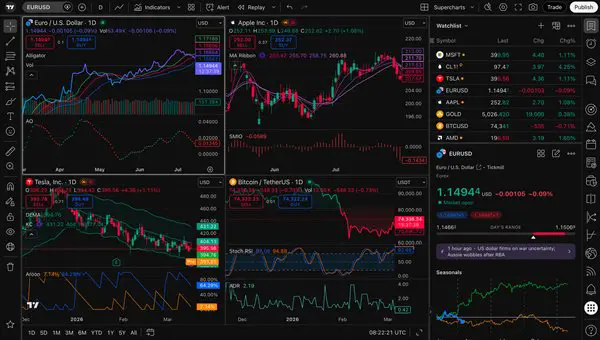
Every market on one screen, live and free. Here is what is waiting on the dashboard:





 GMD
Knowledge Hub
GMD
Knowledge Hub